
01 / Format
Written profiles
800 to 1,200 words
Narrative, reflective, human-centred. Written with the patience the subjects already model in their work. Built to last, not to trend.
The Cartographer Series
A place-based storytelling project documenting 100 people, projects, and institutions whose work is quietly reshaping Africa from the inside out. Not the loudest stories. The most rooted ones.
Why this exists.
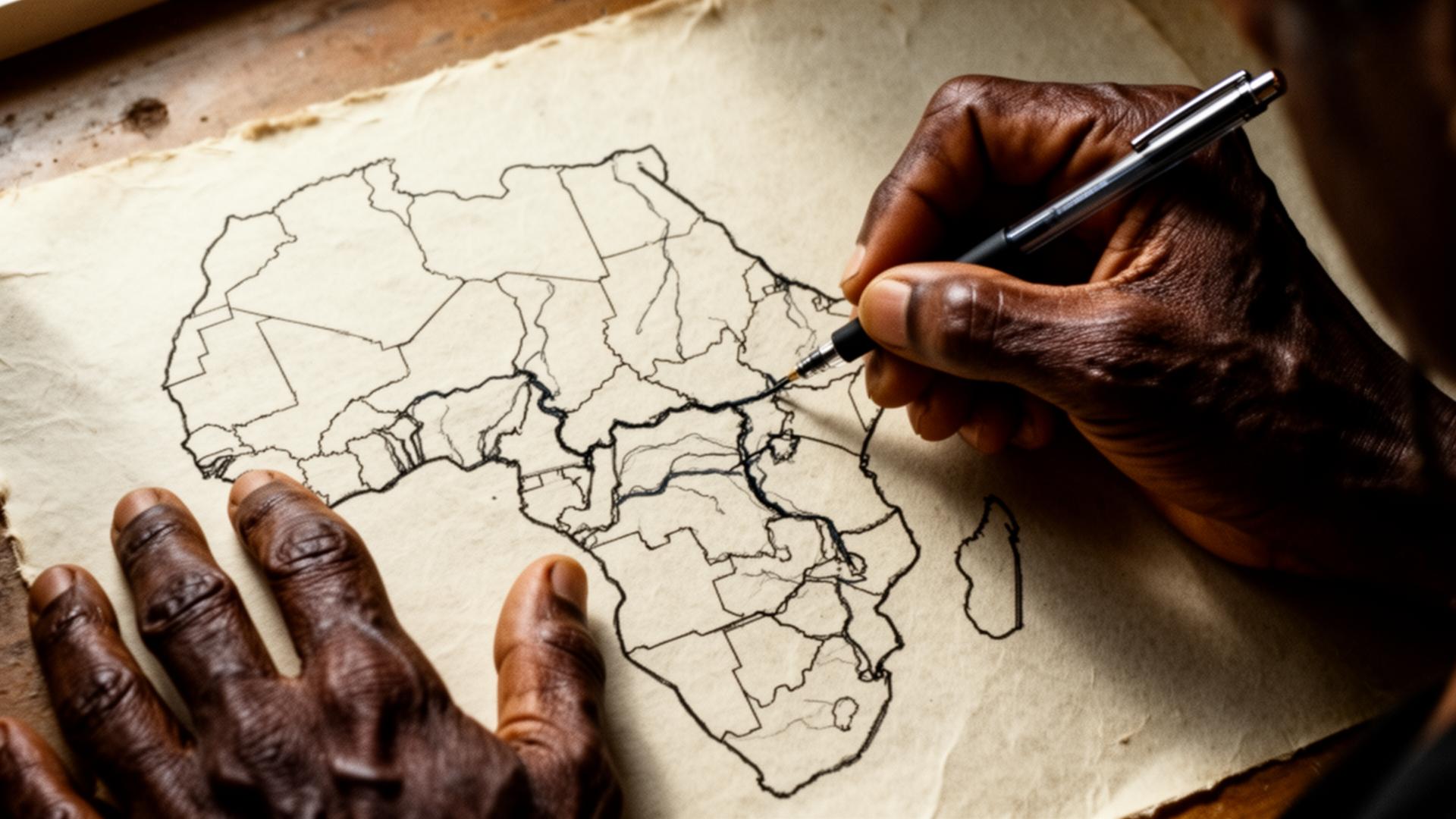
History is written by those who hold the pen. Futures are shaped by those who draw the maps.
Africa's imagination has long been outsourced. A new generation of builders, educators, farmers, technologists, urbanists, and spiritual leaders are writing a different story. One that deserves documentation, connection, and celebration.
By spotlighting 100 such efforts, we aim to re-map where influence actually lives on this continent, give local and global actors living proof of what is possible, connect place-rooted practitioners who have been building in isolation, and put a fresh pipeline of investable change in front of funders who are still looking in the wrong places.
We are also here to archive hope. In a time when noise, despair, and neglect have made it hard to find.
0
Stories documented.
One hundred people, projects, and institutions. Selected not for scale or visibility, but for depth of commitment to a specific place.
0
Geopolitical zones.
Nigeria's full geographic range. North Central, North East, North West, South East, South South, South West. No zone left unmapped.
0
Higher education institutions.
Across Nigeria, South Africa, and Kenya alone, distributed across 305 secondary cities. This is the landscape the Cartographer Series moves through.
0
Enduring conviction.
Africa's future will not be built everywhere at once. It will be built carefully, locally, and repeatedly, by people who choose to stay.
The portrait of a Cartographer story.
The nomination call is deliberately open. But the editorial eye is looking for something specific. A quality of commitment that most storytelling frameworks do not know how to value. Here is what it looks like.
01 / Portrait
Someone who chose a specific place when every signal pointed elsewhere.
02 / Portrait
Someone whose work would not exist, could not exist, anywhere else.
03 / Portrait
Someone the community would genuinely mourn if they left.
04 / Portrait
Someone doing quietly extraordinary things in a place with an ordinary-sounding name.
05 / Portrait
Someone the world has not found yet, though it should have by now.
A note on eligibility
Stories may feature individuals, small teams, community organisations, social enterprises, educational institutions, and cultural or civic projects. The work itself can take many forms, a school with a twenty-year legacy of transforming a town, a cooperative reviving a regional economy, a tech lab restoring dignity through employment, a land project regenerating an ecosystem. The only criterion that is non-negotiable is place anchoring: deep, sustained, deliberate commitment to a specific location.
What the series produces.
01 / Format
800 to 1,200 words
Narrative, reflective, human-centred. Written with the patience the subjects already model in their work. Built to last, not to trend.
02 / Format
Long-form visual
Quiet, considered photography. Made for the communities where the stories originate, as much as for the broader audience beyond them.
03 / Format
Five to ten films
Selected stories given roughly ten minutes of extended treatment. Deep immersion into person, place, and the work itself.
04 / Format
One hundred pins
Every story plotted with layered insight. A permanent, browsable archive of place-rooted transformation across the continent.
05 / Format
First edition, hardbound
Beautifully bound profiles for archival, gifting, and institutional use. An object made to be kept, returned to, and passed on.
06 / Format
Readings, screenings, salons
Open-house gatherings that begin in the communities where the stories live, and travel outward from there with the same care.
The ethos.
01 / Principle
In every Cartographer story, place is an active force, not a setting. It shapes the decisions the subject makes, the trade-offs they accept, the imagination they carry.
02 / Principle
We reject parachute journalism and the transactional interview. Stories are co-held, not taken. Subjects retain dignity and agency throughout the entire process, from the first conversation to the final published word.
03 / Principle
The Cartographer Series is not a campaign with an end date. It is the beginning of a permanent, community-owned archive of African place-based transformation. A reference for policymakers, funders, and builders who need to understand what genuine long-term commitment looks like before they ask for it.
How to get involved.
Most of the stories we are looking for will not come to us. We will be brought to them, by community leaders, pastors, principals, cooperative chairpersons, and former students who never forgot who stayed. Choose the door that fits.
Questions.
Most of the stories we are looking for will not come to us. We will be brought to them. Submit a nomination, or get in touch to partner, contribute, or follow along.
No. Every nomination is reviewed with care, but not every nomination becomes a story. The editorial constraint is depth, not volume. Nominees who are not selected this season are kept on file and may be revisited in later cycles.
Individuals, small teams, community organisations, social enterprises, educational institutions, and cultural or civic projects. The work itself can take many forms. The single non-negotiable criterion is place anchoring: deep, sustained, deliberate commitment to a specific location.
The first season is anchored in Nigeria, with a deliberate effort to cover all six geopolitical zones. From there, the series expands across the continent in seasons keyed to specific regions, beginning with countries where place-rooted practice is already well documented in fragments.
Stories are co-held, not taken. Every subject reads, edits, and approves their profile before publication. Photography is conducted on the subject's terms, in places and at times they choose. We reject parachute journalism in all its forms.
Yes. Funders, research allies, regional institutions, and media collaborators are welcome to partner on individual stories, regional editions, or full seasons. Reach out via the partner door above and we will respond within two weeks.
The first cohort of stories enters editorial in early 2026, with public release rolling through the year. The interactive map and reader circle open ahead of publication so early supporters can follow the work as it unfolds.
Nominate a story.
Most of the stories we are looking for will not come to us. We will be brought to them. By community leaders who know what has been quietly built in their city. By pastors and principals and cooperative chairpersons who have watched someone choose their community over and over again. By former students who went on to greater visibility and never forgot who stayed. If you know someone whose work is place-anchored, transformative, and underreported, we want to hear about them.
Every nomination is reviewed by the editorial team with care. Not every nomination will result in a published story. But every person nominated will be treated with the dignity their commitment deserves.