Essay
Beauty from Brokenness: The Theology of Place and the Redemptive Imagination of the Marsh Collective
In Opelika, Alabama, John and Ashley Marsh have spent decades restoring old buildings and rebuilding community life.
Laughter Atanda
Contributor, The Place Collective
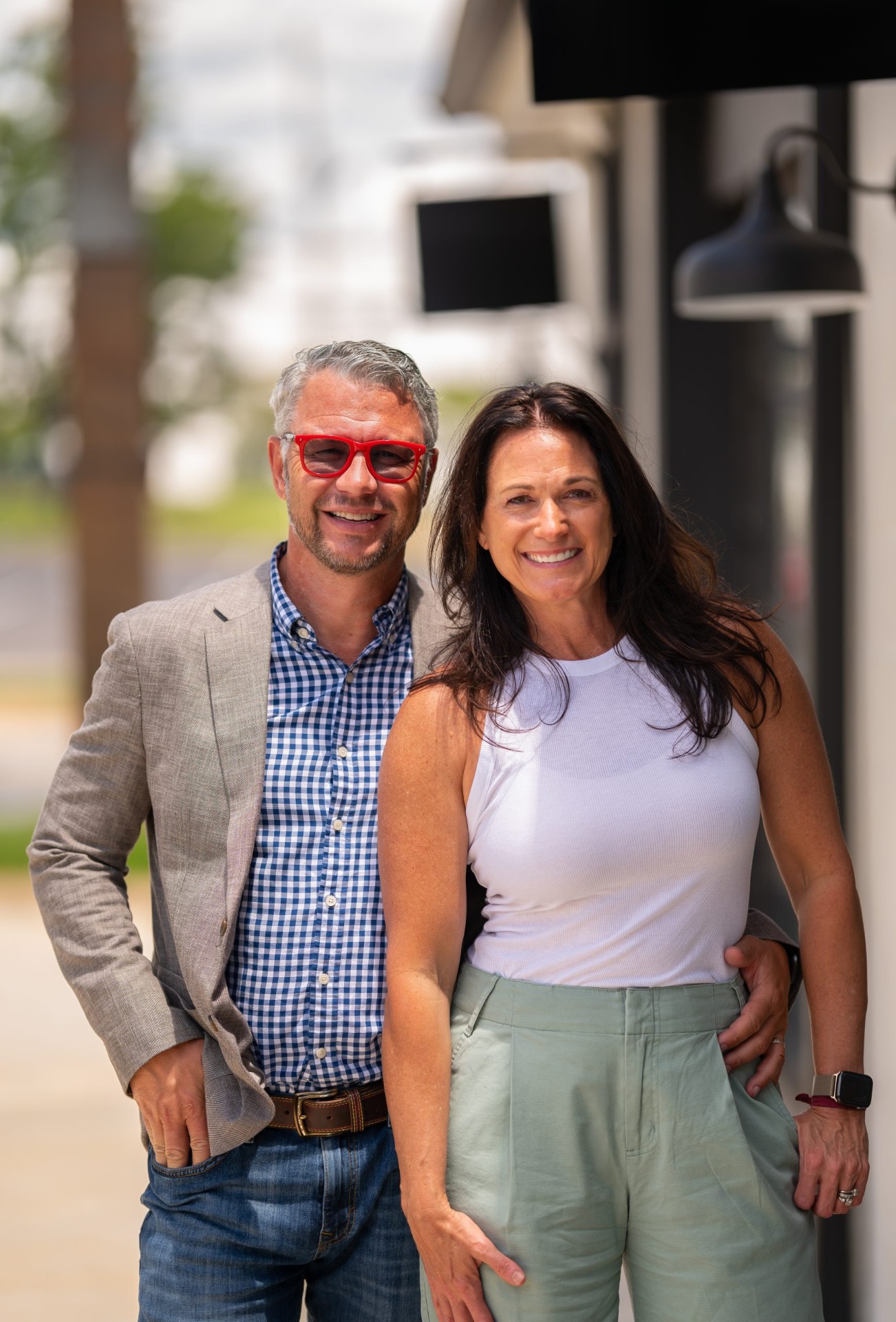
Image Faith & Co
People tend to judge places by what they have become. A thriving city attracts investment, talent, and attention. A declining town is easier to dismiss; people take its empty storefronts and deteriorating buildings as proof that its best years are behind it.
Yet a place's condition at any given moment tells us little about what it might become under different circumstances.
An abandoned building may have lost its commercial value, but it still has potential for another use. A struggling neighbourhood may lack investment but still have community. And a town that appears forgotten may still have much of what it needs to build a different future.
For John and Ashley Marsh, this understanding emerged from an unlikely place: the near collapse of their own lives.
In Opelika, Alabama, the couple have spent more than two decades restoring historic properties, building businesses, and helping other communities rethink what their built environments can do. Their work, now brought together through the Marsh Collective, has grown from renovating a single house into an approach to real estate and community development that reaches well beyond their hometown.
But they formed the philosophy behind it long before they had the resources, experience, or credibility to undertake such work.
It began with two people confronting the consequences of their own brokenness.
The Years Before Restoration
In the early 1990s, John and Ashley Marsh were young, married, and struggling to build a life together. Unresolved personal difficulties, financial instability, and decisions that steadily eroded their trust marked their relationship.
By 1996, their marriage was on the verge of collapse.
In accounts they have shared publicly, both speak candidly about those years. John struggled with drug addiction, dishonesty, and overwhelming debt. Their relationship had been damaged by infidelity, separation, and repeated attempts to begin again. Financial pressures were severe, and neither could see a way forward.
At one particularly difficult point, John contemplated taking his own life.
He has described that moment as the turning point in his relationship with God. Overwhelmed by his circumstances, he cried out for help and experienced what he understood to be an encounter with divine love.
When he returned to Ashley and told her he had changed, she was understandably sceptical. She had heard promises before. Their history gave her little reason to believe that this declaration would be different.
What followed was neither immediate reconciliation nor an effortless transition into a better life.
John began confronting the behavioural patterns that had contributed to their difficulties. Ashley, who was navigating her own struggles, would later describe a profound spiritual experience following a miscarriage. Both came to understand their faith as the foundation upon which they could begin rebuilding their lives.
A pivotal moment in John's journey came at a Promise Keepers gathering, where Tony Evans preached from the biblical account of Hosea. The message about covenantal love, faithfulness, and the difficulty of reconciliation challenged his understanding of marriage and personal responsibility.
Yet spiritual conviction alone did not resolve the damage that had accumulated over the years.
They needed guidance, accountability, and practical help.
Key figures in their recovery included Dwayne Wooten, who offered counselling and spiritual mentorship, and Don Martin, a real estate investor who helped John understand business, financial responsibility, and property ownership. Later, Paul Estes became another important spiritual influence in their lives.
These relationships mattered because the couple was learning to live differently, not just to talk differently about their lives.
Their marriage required years of counselling, difficult conversations, changed habits, and the gradual restoration of trust. Their financial recovery demanded similar discipline.
This part of the story matters. As the Marshes experienced it, personal restoration was not a single dramatic moment that made every subsequent decision easier. It involved the much less visible work of taking responsibility, receiving correction, and becoming dependable over time.
That experience would eventually shape how they approached a different kind of brokenness.
The declining buildings and neglected streets of Opelika began to look less like evidence of permanent failure and more like places where patient work could make a difference.
Learning to See Opelika Differently
The Marshes did not discover Opelika through market research. It was home.
They built their lives there, endured some of their most difficult years, and developed relationships that helped them start over.
As they worked to restore their marriage and financial stability, they also began paying closer attention to the condition of the town around them.
Parts of historic Opelika had experienced years of neglect. Buildings stood underused, properties deteriorated, and parts of downtown no longer supported the commercial and social activity they once had.
To many investors, these conditions might have suggested limited opportunity. For the Marshes, they presented a different question: what could these buildings become if someone was willing to invest the effort required to restore them?
They began with an old house.
The renovation was slow and demanding. Money was scarce, their construction experience was limited, and progress depended largely on what they could afford from one period to the next. John has recalled that their first substantial renovation took approximately six and a half years.
They made mistakes, faced unexpected costs, and sometimes had to repeat work. They learned construction partly through experience and partly out of necessity, working with limited resources.
That first property became an education in more than real estate.
It revealed the potential in buildings others had overlooked, while teaching them that restoration required a willingness to stay committed long after the initial excitement had passed.
Gradually, one property led to another.
By 2000, they had established Marsh Real Estate Investments, developing an approach that combined acquiring and renovating underused properties with long-term ownership, creative financing, and developing businesses that could bring activity back into downtown.
Over the following decades, their work expanded into construction, hospitality, restaurants, architectural salvage, and consulting.
By 2024, John described their involvement in restoring more than 300 properties in Opelika and developing or supporting over 60 businesses.
The work eventually extended to other American towns through the Marsh Collective, helping local investors and community leaders connect their aspirations for renewal with the practical demands of financing and implementation.
What began as an effort to repair old buildings had become a broader way of thinking about the relationship between property, enterprise, and community life.
A restored building could accommodate a business. That business could create jobs, attract visitors, and support neighbouring establishments. More importantly, it could give people another reason to use a street, encounter one another, and participate in their town's everyday life.
The built environment was no longer being treated simply as a collection of physical assets. It was becoming part of an effort to restore the social and economic relationships that allow a place to function.
This is where the Marsh Collective's work becomes particularly interesting.
A Theology of Place
At the centre of the Marsh Collective's work is a Christian conviction that deserves closer attention: God cares not only about individuals' lives, but also about the places where those lives unfold.
This understanding is deeply rooted in Scripture.
The biblical account begins in a garden, with humanity given the responsibility to cultivate and care for creation. Throughout the Old Testament, the relationship between people and land remains central to questions of belonging, justice, livelihood, and faithfulness.
When the Israelites were carried into exile, the prophet Jeremiah instructed them to build houses, plant gardens, establish families, and seek the welfare of the cities in which they lived.
Jeremiah 29:7 is especially significant. The exiles were not told to treat their temporary surroundings as irrelevant while they waited for a better future. They were called to care for the well-being of the place where they had settled.
The rebuilding of Jerusalem under Nehemiah offers another expression of this responsibility. Restoring the city walls was a physical undertaking, but it also raised questions of leadership, collective responsibility, economic injustice, and the renewal of communal life.
These accounts do not provide a ready-made model for contemporary real estate development. They do, however, establish an important principle: care for people cannot be entirely separated from care for the physical and social conditions in which they live.
A house offers shelter, but it also makes family and hospitality possible. A street connects buildings, but it also provides space for economic activity and human encounter. A town is more than its infrastructure, yet the quality of that infrastructure can profoundly influence the lives of its inhabitants.
For the Marshes, restoring buildings became one way of giving practical expression to their faith.
Their experience of personal restoration taught them to look beyond something's immediate condition and consider what it might become through sustained attention, sacrifice, and care.
They began applying that understanding to property.
Of course, an important distinction exists between restoring a person and renovating a building. Human lives are not development projects, and the language of redemption should not obscure the practical realities of finance, construction, and ownership.
But the connection in the Marshes' thinking is understandable.
Their faith shaped what they believed was worth pursuing. Their growing real estate experience gave them the means to pursue it. And their attachment to Opelika gave that conviction a place to be tested.
The result is an approach to development in which commercial activity and community responsibility reinforce one another.
The Kind of Capital a Place Needs
One of the Marsh Collective's most useful contributions is its understanding that the source and character of investment can be just as important as the amount available.
Many struggling towns do not simply suffer from a lack of capital. They also struggle to attract investment that fits their circumstances.
A developer seeking rapid appreciation and a quick exit may see little value in a place where economic recovery will take years. An investor focused only on short-term returns may struggle to justify preserving an old building when demolition or replacement seems more immediately profitable.
Yet decisions made under those pressures can have consequences for a community for generations.
The Marsh Collective approaches this problem through three interrelated forms of capital.
Patient Capital
Restoring a neglected place takes time.
Buildings must be repaired, tenants attracted, businesses developed, and confidence gradually rebuilt. Some projects may take years to generate the returns investors ordinarily expect.
Patient capital recognises this reality. It gives a project enough time to become financially productive without forcing decisions that undermine its longer-term purpose.
For the Marshes, this is part of a larger commitment to thinking beyond conventional investment cycles. They plan for 50, 75, and even 100 years.
Such a horizon changes the questions being asked. Instead of focusing only on what a property might earn in the next few years, attention shifts to what kind of place an investment will help create for the next generation.
Properly Aligned Capital
Money carries expectations, and those expectations influence development.
An investor may share a community's desire for improvement while holding a very different understanding of what improvement should mean.
For one person, success may be measured primarily by rising property values. For another, it may mean preserving local businesses, improving public life, creating employment, or ensuring that residents have somewhere they can continue to belong.
The Marshes argue that successful long-term renewal requires aligning a project's vision with the values of those financing it.
This does not eliminate disagreement, but it clarifies the purpose of investment.
Capital intended to support a community's future must be governed by an understanding of that community's needs, rather than assuming that every profitable development will automatically produce a better place.
Productive Capital
The third principle recognises that good intentions do not substitute for economic sustainability.
A restored building must be maintained. A business must pay its workers and meet its obligations. A development initiative that depends indefinitely on donations may struggle to survive when its original funding disappears.
The Marsh Collective therefore emphasises investments that can generate reasonable financial returns.
This is not a rejection of generosity. It recognises that sustainable enterprises can provide the economic foundation for work that must continue for many years.
Taken together, these three principles offer a useful framework for anyone concerned with renewing neglected towns.
Investment must be patient enough to accommodate the realities of development, aligned enough to protect the larger purpose, and productive enough to sustain what is being built.
The challenge is to hold all three together.
Beyond the Restoration of Buildings
The Marshes has spoken often about what it calls irreplaceable real estate: historic buildings whose materials, craftsmanship, architectural character, and relationship to their surroundings would be difficult or impossible to reproduce today.
Preserving such structures has a practical argument.
Older buildings embody economic and cultural value that conventional development assessments often miss. Their design may reflect the history of local commerce, the skills of earlier generations, or patterns of community life that have gradually disappeared.
When these buildings are demolished, a town loses more than an ageing structure. It may also lose part of the physical record of its own development.
Preservation, however, cannot be an end in itself.
A beautifully restored street that becomes inaccessible to the people who have lived and worked there for decades raises questions about whose interests the renewal has ultimately served.
This is one of the central tensions in contemporary placemaking.
As investment returns to neglected districts, property values can rise, commercial rents can increase, and the very people who sustained a neighbourhood through difficult years may find themselves unable to remain.
For this reason, we must judge the success of any attempt at community renewal by more than the number of buildings renovated or businesses opened.
It matters who benefits from the improvements, who can afford to participate in the renewed economy, and whether the social relationships that gave the place its character are strengthened or weakened.
The Marsh Collective's emphasis on stewardship offers a valuable starting point for these questions, even if answering them requires more than good intentions.
Responsible development requires continued attention to ownership, affordability, local enterprise, and residents' long-term interests.
The aim should be to create economically stronger places without losing the people and relationships that make them worth preserving.
This is particularly relevant to towns and smaller cities seeking alternatives to decline. Their future cannot depend entirely on attracting outside investment. It must also involve recognising and developing the capacities, resources, and institutions already present.
In this sense, the deeper work of placemaking is not simply improving physical surroundings. It is the patient rebuilding of the conditions that allow a community to sustain itself.
The Responsibility of Staying
One of the most compelling aspects of John and Ashley Marsh's story is their decision to remain in Opelika.
They could have treated their hometown as the place where their difficulties began and sought a new life elsewhere. Instead, they chose to invest their time, resources, and growing experience in the community they already knew.
Over time, that commitment became the foundation of their work.
This offers a lesson, especially when economic opportunity is so often tied to mobility.
Moving to a larger city can provide access to education, employment, capital, and networks that are unavailable elsewhere. For many people, it is a necessary and worthwhile decision.
But the movement of people towards established centres of opportunity also leaves another question unanswered: who will undertake the difficult work of building opportunity in overlooked places?
The answer cannot rest solely on individual sacrifice. Communities need functioning institutions, supportive public policy, infrastructure, enterprise, and investment.
Still, people willing to commit themselves to a place can make an enormous difference.
They develop relationships that cannot be assembled overnight. They come to understand the particular difficulties of their communities. They recognise assets that outsiders might miss, and they have reason to care about the consequences of their decisions long after a project is completed.
The Marshes' experience also demonstrates that such commitment must be accompanied by competence.
Conviction may give them the reason to begin, but it cannot replace the skills needed to acquire property, manage construction, run businesses, build partnerships, and make sound financial decisions.
Their work has developed through years of practical learning, commercial experimentation, mentorship, and sustained engagement with the realities of running enterprises.
This combination of commitment and capability has allowed an initial effort in Opelika to grow into work with other towns.
The Marsh Collective's wider significance lies here.
Its story suggests that a different approach to development becomes possible when those responsible for shaping a place think of themselves as stewards of its future rather than temporary beneficiaries of its assets.
That responsibility includes making profitable decisions. It also involves knowing when immediate profit is too narrow a measure of what should be done.
Beauty from Brokenness
John and Ashley Marsh's lives have changed considerably since the difficult years of their early marriage. Their family has grown, their businesses have expanded, and their work now reaches communities beyond Opelika.
Yet the idea that first shaped their approach remains recognisable.
They believe that, through love, responsibility, and sustained effort, what has been neglected or damaged can become valuable again.
Their Christian faith gives this conviction its theological meaning. Their real estate work provides one practical expression of it.
Neither should be mistaken for a guarantee that following the same formula can restore every struggling place. Towns have different histories, economies, institutions, and constraints. Some face structural difficulties that private initiative alone cannot resolve.
But the Marsh Collective's work offers a useful example of what becomes possible when people look beyond a place's present condition and commit to its future.
It also invites a more demanding understanding of hope.
People sometimes treat hope as an optimistic expectation that circumstances will improve. In the Marsh Collective's experience, it has required much more: years of work, difficult financial decisions, a willingness to learn from failure, and the discipline to stay engaged when progress was slow.
This connects to the experience that first brought John and Ashley to faith.
Their marriage was not restored simply because they believed restoration was possible. That belief had to be followed by changed behaviour, patient reconciliation, accountability, and the rebuilding of trust.
The same principle has informed their approach to Opelika.
A neglected building does not recover because someone sees its potential. Someone must undertake the repairs, assemble the resources, find a viable use for it, and accept responsibility for what happens afterwards.
Perhaps the most important lesson from their story is that restoration demands more than the ability to imagine a better future. It requires a willingness to participate in the difficult work of bringing that future into being.
Sometimes, that work begins with something as ordinary as an old house, a neglected street, and two people who have decided the place they call home is worth building for.